
Real Estate SEO in 2026: A Practical Guide to Ranking Property Listings
Real estate SEO is the fastest way for property professionals to earn free, high-intent traffic in 2026. When a buyer searches for “3 bedroom house near me” or a specific housing society, the agents who show up on page one win the call. This guide breaks down how real estate SEO works, what changed this year, and the exact steps that move listings up the results.
Most agents still rely on paid portals and cold outreach. Yet organic search compounds over time, which makes it the best long-term channel for lead generation. Let us walk through a system you can start applying today.
Why Real Estate SEO Matters More Than Ever in 2026
Search behavior keeps shifting toward hyper-local, question-based queries. Google’s helpful content systems now reward pages that answer a buyer’s full question, not thin listing pages stuffed with keywords.
According to Google Search Central, content should be created for people first and demonstrate real experience. For property websites, that means neighborhood guides, price trends, and honest pros and cons, not just photo galleries.
Agents who invest in real estate SEO build an asset that keeps producing leads long after the ad budget runs out. That is the core advantage.
The three pillars of a strong property site
- On-page relevance: titles, headings, and copy that match what buyers type.
- Technical health: fast loading, mobile-first design, clean site structure.
- Authority: reviews, citations, and quality backlinks from trusted sources.
Keyword Research That Fits Buyer Intent
Effective real estate SEO starts with intent, not volume. A person searching “5 marla plot for sale in Bahria Town” is far closer to buying than someone typing “housing prices.” Map every keyword to a stage in the journey.
Group your keywords into three buckets:
- Awareness: “is it a good time to buy property in 2026,” “how to read a master plan.”
- Consideration: “best housing society for families,” “commercial vs residential plots.”
- Transaction: “3 marla house for sale,” “verified plots in [area].”
Build one strong page per intent. Then interlink them so search engines understand your topical depth. When buyers need help interpreting layouts and documents, point them toward quality service providers who explain the process clearly.
On-Page Real Estate SEO Checklist
On-page optimization is where most listings fail. A clean, descriptive page beats a flashy one every time. Use the table below as your working checklist.
| Element | Best Practice | Common Mistake |
|---|---|---|
| Title tag | Location + property type + year, under 60 characters | Generic “Home for Sale” |
| H1 | One clear headline with the primary keyword | Multiple H1s or none |
| Images | Descriptive filenames, alt text, WebP compression | IMG_0421.jpg with no alt |
| Internal links | Contextual anchors to related guides | “Click here” links |
| Schema | RealEstateListing and FAQ markup | No structured data |
One original tip from the field: add a short “who this suits” paragraph to every listing. It captures long-tail phrases like “family home near school” and helps buyers self-qualify, which lifts both rankings and conversion.
Content and Authority: Where Marketing Support Pays Off
Content is the engine of real estate SEO, but consistency is hard to maintain while you are closing deals. This is where a specialist team earns its keep. A capable Digital Marketing Agency In Islamabad can build your content calendar, optimize listings, and handle link outreach so you stay focused on clients.
Authority also comes from local signals. Reviews, accurate business listings, and mentions on reputable property blogs all reinforce trust. Teams offering digital marketing services in Rawalpindi often bundle these local SEO tasks so agents in twin-city markets rank across both regions.
What great real estate content looks like
- Neighborhood guides with schools, commute times, and amenities.
- Price trend updates refreshed for 2026 market conditions.
- Buyer checklists and financing explainers.
- Video walkthroughs embedded on optimized landing pages.
Technical SEO for Property Websites
Speed and structure decide whether Google trusts your site. Buyers browse on phones, so mobile performance is non-negotiable. Aim for a Largest Contentful Paint under 2.5 seconds.
The Core Web Vitals guidance from web.dev remains the standard benchmark in 2026. Compress images, lazy-load galleries, and remove render-blocking scripts. A slow property gallery is the single most common ranking killer we see.
Keep your URL structure logical: /city/area/property-type. This helps both crawlers and users, and it scales cleanly as your listing count grows.
Off-Page SEO and Link Building for Property Sites
On-page work sets the stage, but off-page signals decide who wins competitive keywords. Backlinks from relevant, trustworthy sites tell Google your property website deserves to rank. Quality always beats quantity here.
Focus your link building on genuinely useful placements. A guest article on a respected local blog, a feature in a property roundup, or a partnership mention carries far more weight than a hundred low-quality directory links. In 2026, spammy link schemes get filtered out fast, so build relationships instead of shortcuts.
Reviews and social proof also function as off-page signals. When buyers mention your agency across the web, those brand signals reinforce authority. Encourage satisfied clients to leave detailed reviews and share their success stories.
Practical link-building tactics that still work
- Publish original market data and let others cite it.
- Write helpful guest posts for local property publications.
- Partner with mortgage brokers and builders for mutual mentions.
- Claim and optimize every relevant business listing.
Tracking and Improving Your Real Estate SEO
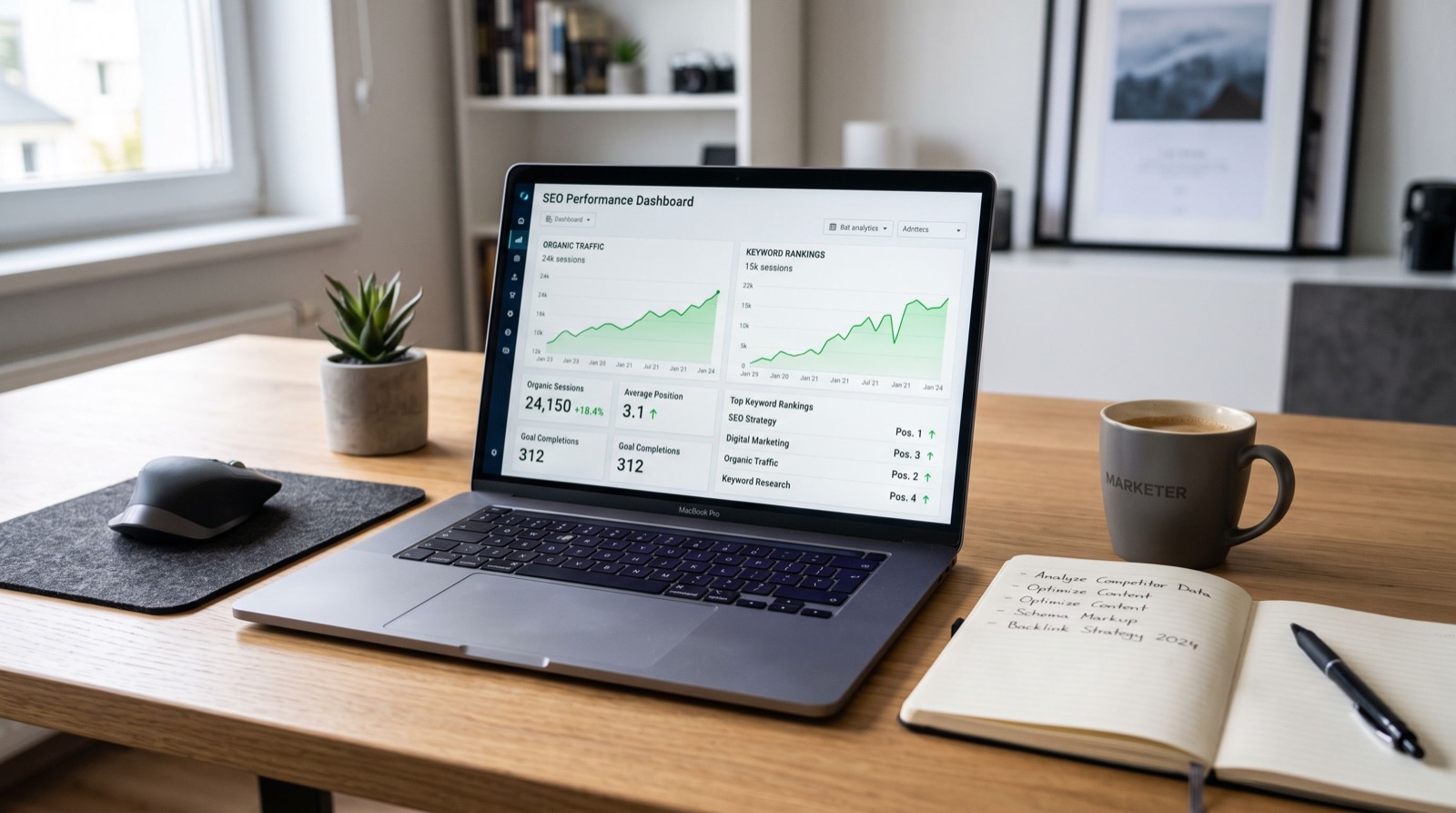
You cannot improve what you do not measure. Set up analytics and search console tracking from day one. Watch organic traffic, keyword positions, and the number of inquiries each page generates.
Review performance monthly and let the data guide your next moves. If a neighborhood guide climbs steadily, expand it with fresh data and more internal links. If a listing page stalls, revisit its title, content depth, and images. Small, consistent refinements compound into major gains over a year.
Real estate SEO is a marathon, not a sprint. The agents who commit to the process and refresh content for 2026 conditions build a durable lead engine that outlasts any single campaign.
Frequently Asked Questions
How long does real estate SEO take to work?
Most property sites see meaningful movement in three to six months. Competitive urban keywords take longer, while local long-tail terms can rank within weeks if the page is well optimized.
Is SEO better than paid ads for real estate?
They work best together. Ads deliver instant leads, while real estate SEO builds a compounding asset that lowers your cost per lead over time. A balanced strategy uses both.
Do I need a marketing agency for real estate SEO?
Not always, but agents rarely have time to publish content, build links, and monitor rankings consistently. A dedicated agency keeps the work moving and applies proven frameworks faster than a solo effort.
What is the biggest SEO mistake real estate agents make?
Publishing thin listing pages with no supporting content. Google favors depth, so pairing each listing with neighborhood and buyer-focused guides is essential in 2026.
Conclusion
Real estate SEO in 2026 rewards agents who publish helpful, intent-matched content on a fast, well-structured site. Start with keyword mapping, tighten your on-page basics, and build authority through consistent content and local signals. If you want expert help executing the plan, partner with a specialist marketing team and turn organic search into your most reliable lead source.